Overview
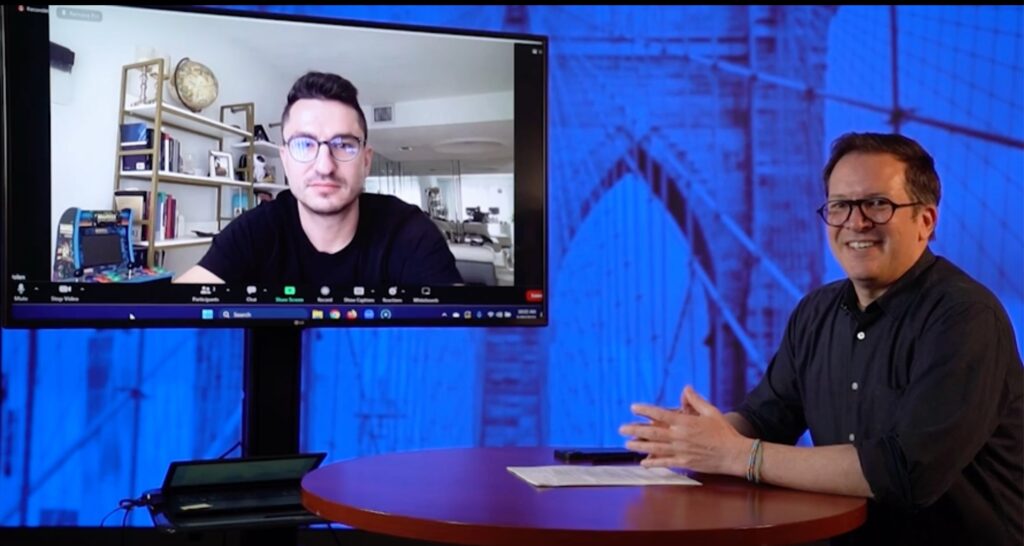
In this project, I served as a technical director/director of photography for a guest lecture video in an introductory blockchain course. The faculty member, Professor Chris Kangas, had arranged a series of expert interviews, including one with Volen Tsolov (Mastercard), who joined remotely. The challenge was to create a polished, high‑quality interview despite the constraints of virtual participation and a limited production window. To achieve this, our media team designed a hybrid setup that blended live studio filming with real‑time Zoom participation, giving the conversation the feel of an in‑person exchange.
Skills Gained
I coordinated a multi‑camera studio shoot, directed the media team, and managed a complex hybrid recording environment. I tested various lighting and camera configurations, refined Zoom recording settings, and led rehearsals to ensure the technical and aesthetic consistency. I collaborated closely with the Media Team. Sharon Jorrin ran our audio and did much of the editing. Fallon Saratovsky ran second camera and the Zoom, she also developed graphics and titles for the series. Through this process, I learned to anticipate technical failures, adapt quickly, and make clear decisions under time pressure. An “aha” moment occurred to me during this process. By positioning Volen’s Zoom feed on a large rolling monitor, it transformed the visual narrative, allowing us to simulate a conversational presence that felt natural and engaging.
Impact
This video filled a key instructional need by bringing contemporary industry perspectives into an asynchronous undergraduate data science course. Blockchain careers evolve quickly, and hearing directly from practitioners helps students connect theory to real‑world applications. The final product has remained in active use for several years, and feedback from Prof. Kangas has been consistently positive. The project demonstrated our team’s ability to innovate within the constraints of online education, and it strengthened OFDIT’s capacity to produce media that enhances student engagement and faculty vision.